Businesses often use terms such as Lead, MQL, SQL and Opportunity.
The problem is that different teams do not always mean the same thing.
Marketing might consider someone qualified because they downloaded several resources.
Sales might consider them unqualified because there is no active buying requirement.
CRM lifecycle stages help create a shared definition of where a contact sits within the customer journey.
What Are CRM Lifecycle Stages?
Lifecycle stages are categories used to represent a contact's relationship with your organisation.
They provide a high-level view of customer progression.
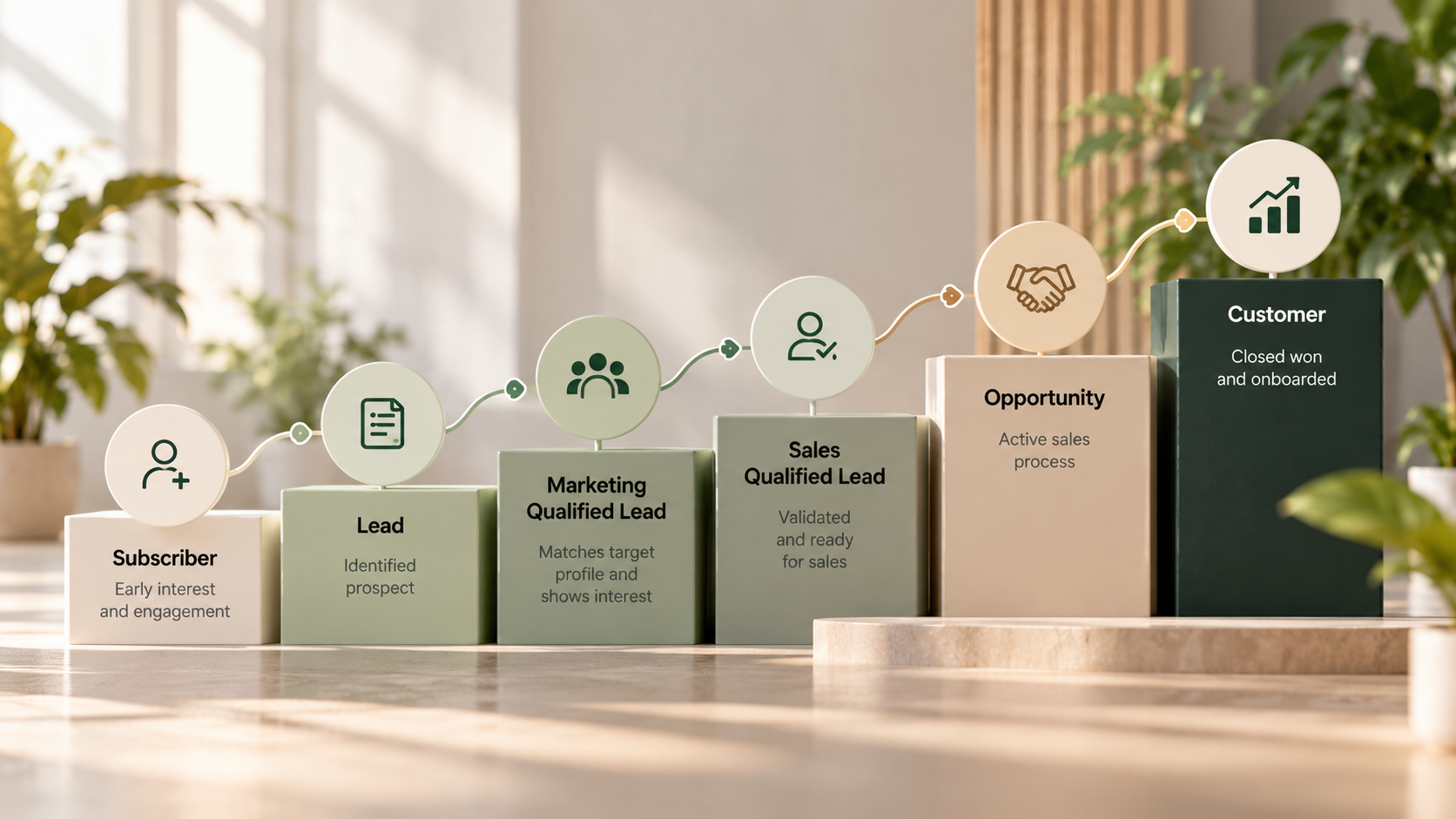
Common stages include:
- Subscriber
- Lead
- Marketing Qualified Lead
- Sales Qualified Lead
- Opportunity
- Customer
- Evangelist
Different organisations may use different names.
What matters most is that everyone understands the definition.
Subscriber
A subscriber is usually someone who has shown early interest but has not demonstrated clear buying intent.
Examples include someone who:
- Subscribed to a newsletter
- Followed a content series
- Registered for updates
Subscribers may eventually become leads, but they are generally at an early stage.
Lead
A lead is someone who has shared enough information to become identifiable within your CRM.
They might:
- Complete a contact form
- Download content
- Attend an event
- Register for a webinar
- Submit an enquiry
However, being a lead does not automatically mean someone is ready for sales.
Marketing Qualified Lead
A Marketing Qualified Lead, or MQL, is a lead that marketing believes deserves additional attention.
Qualification might be based on:
- Company profile
- Job role
- Engagement
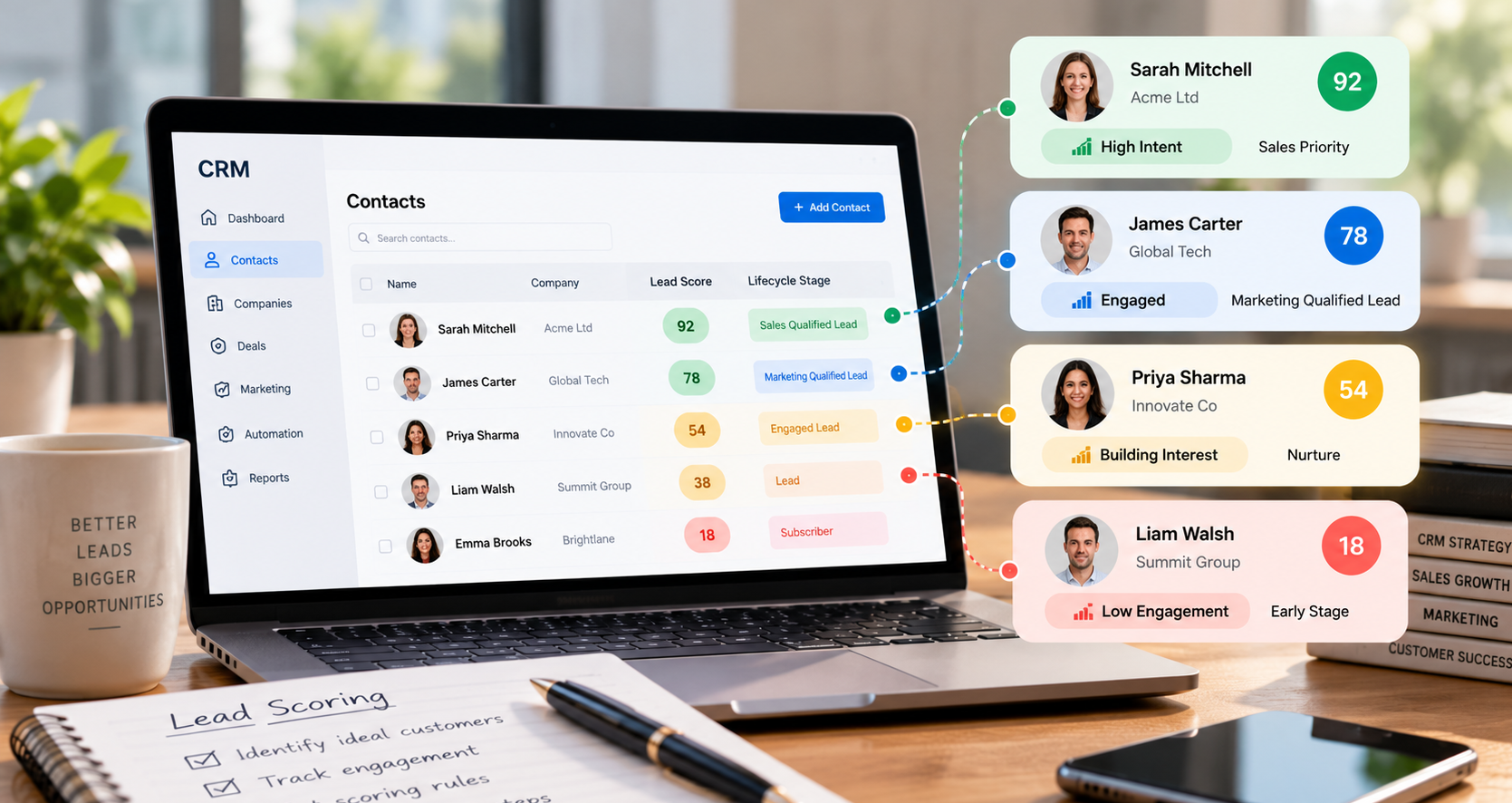
- Lead score
- Content activity
- Website behaviour
For example, someone matching your ideal customer profile who repeatedly visits high-intent pages may become an MQL.
The definition should be agreed between marketing and sales.
Sales Qualified Lead
A Sales Qualified Lead, or SQL, is usually someone who has been reviewed or qualified for direct sales engagement.
Qualification criteria might include:
- Genuine business requirement
- Appropriate budget
- Decision-making authority
- Relevant timing
- Good organisational fit
Not every MQL will become an SQL.
That is normal.
The purpose of qualification is to avoid sending unsuitable leads deeper into the sales process.
Opportunity
A contact generally becomes an opportunity when there is a genuine potential sale.
In CRM terms, this often means a deal record has been created.
An opportunity may contain information such as:
- Estimated value
- Product or service
- Expected close date
- Deal stage
- Sales owner
At this point, the business is actively trying to win the sale.
Customer
Once an opportunity successfully closes, the contact or company becomes a customer.
The CRM should reflect that change.
This is important because customer communication is different from prospect communication.
Customers may enter:
- Onboarding
- Account management
- Support
- Renewal
- Upsell processes
CRM workflows can help manage this transition.
Evangelist or Advocate
Some organisations also track customers who actively support or promote the business.
These might be customers who:
- Provide testimonials
- Refer new business
- Participate in case studies
- Regularly recommend the organisation
This stage is optional but can be useful for businesses with strong referral strategies.
Lifecycle Stage Is Different From Lead Status
These two concepts are often confused.
Lifecycle stage represents the broader customer journey.
Lead status normally represents the current sales follow-up status.
For example, a contact might have:
Lifecycle stage: Sales Qualified Lead
Lead status: Attempted to Contact
Later:
Lifecycle stage: Sales Qualified Lead
Lead status: Connected
Keeping these concepts separate can improve reporting.
Define the Rules Clearly
Every lifecycle stage should have a documented definition.
For example:
MQL = Matches target profile AND reaches lead score of 50.
SQL = Sales has confirmed an active requirement.
Opportunity = Deal record created after discovery.
Customer = Deal closed-won.
Clear definitions reduce subjective interpretation.
Use Automation Carefully
CRM automation can update lifecycle stages when specific conditions are met.
For example:
Form submitted → Lead
Lead score reaches 50 → MQL
Sales qualifies contact → SQL
Deal created → Opportunity
Deal closed-won → Customer
However, automated stage changes should reflect genuine business processes.
Do not create rules simply because the CRM supports them.
Avoid Moving Lifecycle Stages Backwards Without Good Reason
Lifecycle stages are generally designed to show progression.
A customer should not suddenly become a Lead simply because they downloaded another resource.
Review how your CRM handles historical customers who begin another buying journey.
Often the better approach is to create a new opportunity while maintaining their customer lifecycle stage.
Use Lifecycle Reporting
Once lifecycle stages are reliable, they can support valuable reporting.
You can measure:
- Leads generated
- Lead-to-MQL conversion
- MQL-to-SQL conversion
- SQL-to-opportunity conversion
- Opportunity-to-customer conversion
This helps identify where prospects are dropping out.
Final Thoughts
CRM lifecycle stages create a shared language for sales and marketing.
They help organisations understand where contacts are within the customer journey and what should happen next.
Keep the definitions simple.
Document the criteria.
Make sure sales and marketing agree.
Then use automation and reporting to support the process.
Toyn Consultancy can help organisations review lifecycle stages, qualification criteria and CRM automation so customer journeys are easier to manage and measure.