As businesses scale, their Customer Relationship Management (CRM) system should evolve alongside them. What works during the early stages — simple pipelines, minimal automation, and basic reporting — can quickly become restrictive as teams grow, processes become more complex, and data requirements increase.
A CRM is not a static tool. To remain effective, it must continuously adapt to support your business’s changing needs. Without regular optimisation, even the most powerful CRM platforms can slow down operations rather than enhance them.
So, how can you ensure your CRM continues to support growth instead of holding your business back?
Why Growing Businesses Outgrow Their CRM Setup
In the early days, a CRM is often configured quickly to get teams up and running. However, as the business expands, new challenges begin to emerge:
- Sales pipelines become more complex
- Additional teams require access and visibility
- Reporting needs become more advanced
- Customer journeys involve more touchpoints
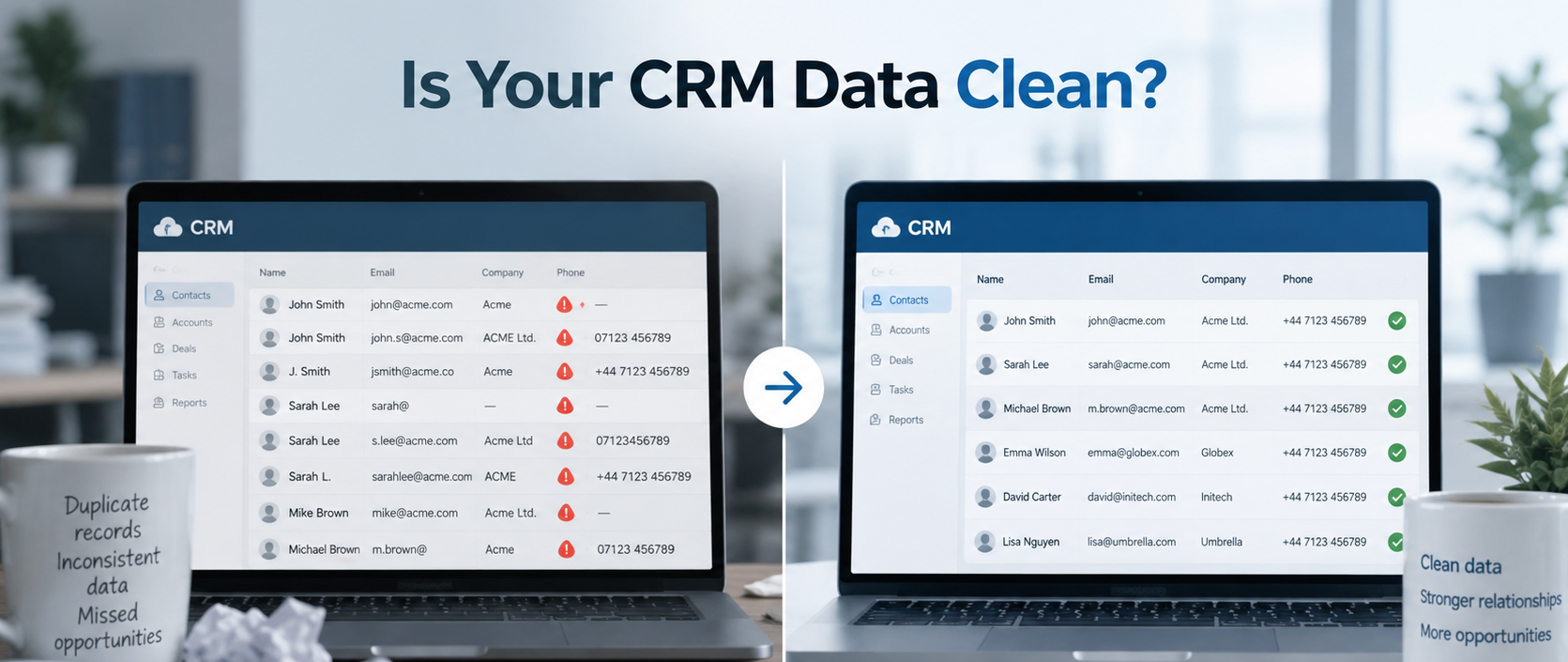
Without proper updates, your CRM can become cluttered, inefficient, and difficult to manage. This often leads to poor user adoption, inconsistent data, and limited visibility across teams.
The Importance of Reviewing Your CRM Strategy
Regularly reviewing your CRM strategy is essential to maintaining efficiency and ensuring your system aligns with current operations.
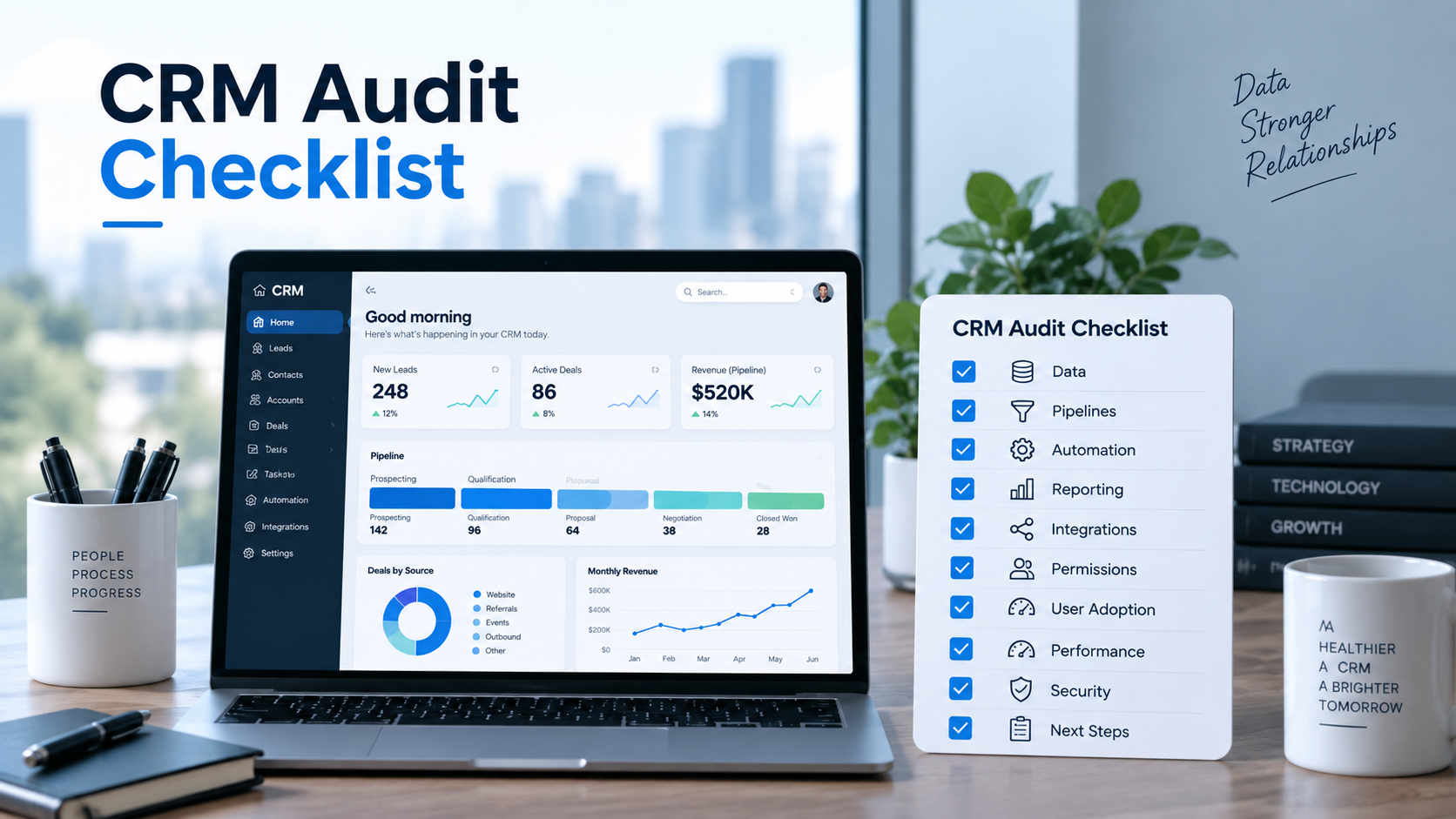
A CRM review helps you assess:
- Whether your pipelines still reflect your sales process
- If workflows are supporting or slowing down your team
- Whether your reporting provides meaningful insights
- How well your CRM integrates with other business tools
By identifying gaps and inefficiencies, you can make informed improvements that support both day-to-day operations and long-term growth.
Refining Pipelines to Match Business Complexity
As your business grows, your sales process often becomes more nuanced. A simple pipeline with a few stages may no longer reflect how deals actually progress.
Refining your pipelines allows you to:
- Accurately track deal progression
- Improve forecasting and reporting
- Align sales activities with real-world processes
- Provide better visibility across teams
A well-structured pipeline ensures your CRM reflects how your business actually operates, rather than forcing your team into outdated workflows.
Optimising Workflows for Efficiency and Scale
Automation plays a critical role in scaling operations. However, workflows that were set up early on may no longer be relevant or efficient.
As part of your CRM optimisation, consider:
- Removing outdated or duplicate workflows
- Automating new processes as teams expand
- Ensuring workflows align with current business goals
- Reducing manual steps wherever possible
Optimised workflows help maintain consistency, reduce human error, and free up your team to focus on higher-value activities.
Improving Reporting for Better Decision-Making
As your organisation grows, so does the need for data-driven insights. Basic reports may no longer provide the level of detail required to support strategic decisions.
Enhancing your CRM reporting structure can help you:
- Track key performance indicators (KPIs) more effectively
- Identify trends and opportunities
- Monitor team performance
- Make informed decisions based on real-time data
When reporting is aligned with business objectives, your CRM becomes a powerful tool for planning and growth.
Ensuring Your CRM Supports Strategic Objectives
A well-optimised CRM should support your business strategy — not slow it down. If your system feels difficult to use, lacks clarity, or fails to deliver meaningful insights, it may be time for a review.
Key signs your CRM needs optimisation include:
- Low user adoption across teams
- Inconsistent or inaccurate data
- Limited visibility into sales and marketing performance
- Manual processes that could be automated
Addressing these issues ensures your CRM continues to add value as your business evolves.
Final Thoughts: A CRM That Grows With You
Your CRM should be a dynamic system that evolves alongside your business. By regularly reviewing your setup, refining pipelines, optimising workflows, and improving reporting, you can ensure your CRM continues to support efficiency and growth.
A well-maintained CRM doesn’t just manage data — it enables better collaboration, clearer insights, and more effective decision-making.
If you are reviewing your CRM strategy this year, taking the time to optimise your system can make a significant difference to your overall performance.